A Due Diligence Guide for Investors, Compliance Teams, and Procurement Leaders
Forced labor remains a persistent ESG risk across Southeast Asia’s supply chains, particularly in sectors dependent on low-wage migrant labor, such as manufacturing, fisheries, agriculture, and domestic work.
The employment system in the region relies heavily on both public and private recruitment actors, with placements formally registered but poorly coordinated. This complexity, combined with gaps in oversight and frequent administrative confusion, creates vulnerabilities that increase the risk of forced labour and worker exploitation in supply chains.
A 2023 study by the International Labour Organization (ILO) found that forced labor conditions affect up to 29% of migrant workers in Malaysia and 7% in Singapore.
In this article, we have outlined 7 key indicators out of the 11 ILO Forced Labour indicators to understand how they manifest in practice, why they persist, and what operational or legal signs companies and auditors can watch for to identify forced labour risks in supply chains.
For investors, these indicators are important to assess hidden labor-related liabilities, evaluate ESG risk exposure, and inform due diligence and engagement strategies.
1. Abuse of Vulnerability
ILO states that ‘Abuse of vulnerability occurs when an unscrupulous employer or recruiter intentionally takes advantage of a worker’s vulnerable position.’
In Malaysia’s manufacturing sector, Bangladeshi and other migrant workers routinely pay exorbitant recruitment fees to secure jobs in factories, such as the recent allegations at Kawaguchi Manufacturing. These workers arrive heavily indebted and under intense pressure to repay lenders, making them more likely to accept exploitative conditions and less likely to assert their rights.
Such incidents happen across Asia in countries with weak labour law implementation.
Signs to watch out for:
- Workers with irregular immigration or work status tied to one employer
- High recruitment fees or loans creating debt pressure
- Employers controlling both jobs and housing, creating multiple dependencies
2. Deception during Recruitment
Deception is one of the most common and insidious pathways into forced labour. Workers may be lured with promises of decent, wellpaid employment in factories or other supplychain nodes, only to find that the conditions, wages, job location, and even the nature of the work differ significantly from what was promised.
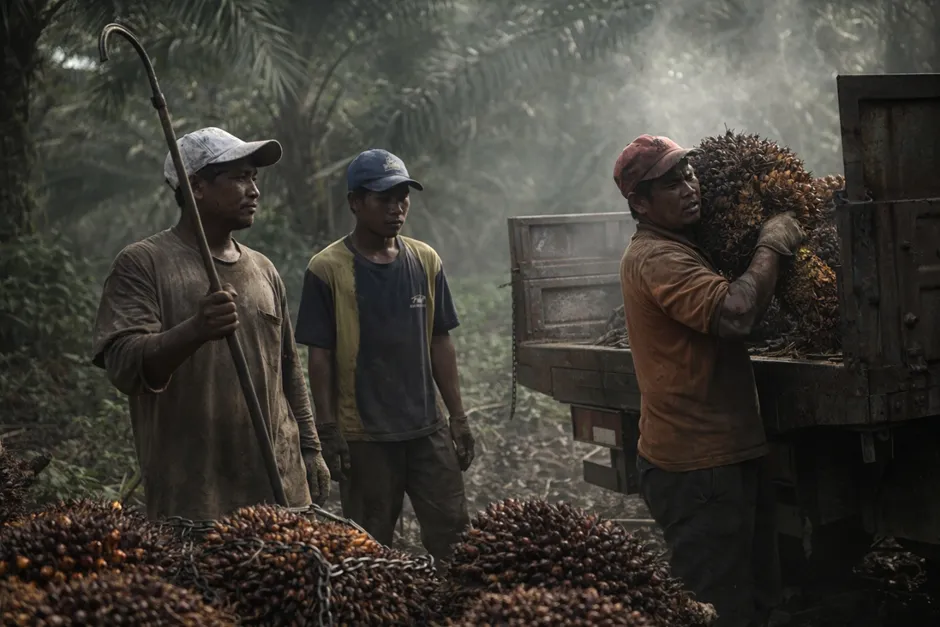
In Southeast Asia’s palm oil sector, for instance, a significant proportion of migrant workers reported being misled about wages, hours, overtime requirements, and job difficulty, according to the International Organization for Migration (IOM).
Signs to watch out for:
- Contracts unclear, missing, or in a language the worker doesn’t understand
- Promised visas, permits, or benefits not provided
- Recruitment via informal or unverified channels
- Hidden fees or undisclosed deductions post-placement
3. Restriction of Movement
Migrant workers face restrictions on their movement during recruitment or at the workplace. For example, investigations in Thai fisheries report workers locked in facilities, monitored, or required employer permission to leave. These conditions persist due to employer control over visas, housing, and transport.
Signs to watch out for:
- Locked dormitories or workplaces
- Absences from work monitored or timed
- Controlled transport between housing and workplace
- Curfews imposed on workers
- Limited access to external assistance or reporting mechanisms
4. Isolation
Workers can be deliberately isolated to limit contact with the outside world and prevent them from seeking help. In rural farms or domestic settings across Southeast Asia, migrant workers have been reported to be confined to remote worksites or been hidden from visitors. Isolation persists when employers control housing and work locations and external oversight is limited.
Signs to watch out for:
- Remote or hard-to-access worksites
- Restricted visitor access
- Prohibition from attending religious or community activities
- Workers unaware of location or transport options
5. Abusive Working and Living Conditions
Investigations across agriculture, construction, and extractive sectors in Asia show workers enduring hazardous tasks, exposure to extreme temperatures, and unsafe housing. For companies, this points to structural failures.
Signs to watch out for:
- Work conducted without adequate safety equipment or training
- Living quarters that are overcrowded, unhygienic, or lack basic utilities
- Workers exposed to extreme heat, cold, or hazardous materials without protection
- Insufficient food, rest, or medical access
- No practical option for workers to refuse tasks or leave despite health risks
6. Debt Bondage
In some supply chains, financial obligations quietly trap workers in exploitative roles. Investigations in agriculture and manufacturing across Nepal, for example, reveal workers performing years of labour for minimal compensation under the pretense of repaying loans or recruitment fees. For companies, this signals hidden risks in recruitment practices and a supply chain reliant on coerced labour rather than genuine employment.
Signs to watch out for during due diligence:
- Recruitment or placement fees charged to workers
- Workers cannot access or verify payroll or debt records
- Family members expected to work to offset obligations
7. Excessive overtime
The revised 2025 Indicators of Force Labour documents cases, including domestic work in Kuwait, where employees worked 15-hour days with no rest or days off. It clarifies that ‘excessive working hours alone do not automatically constitute forced labour, but they should trigger closer scrutiny, particularly when they exceed limits set by national law or collective agreements.’
Signs to watch out for during due diligence:
- Workers consistently exceed legal or contractual working hours
- No defined rest days or break periods
- Overtime refusal met with penalties, dismissal threats, or blacklisting
- Production or piece-rate targets requiring extreme hours to earn minimum wage
- Contracts vague or silent on working hours and overtime
Partner with Fullcircle Risk Consulting to identify Forced Labor Risks
At Fullcircle Risk Consulting, we help organizations uncover and mitigate forced labor risks through deep, region-specific expertise. Our services include:
- Forced labor and modern slavery risk assessments
- Human rights abuse checks across supply chains and vendor networks
- Recruitment and labor practice investigations
- ESG due diligence on third-party vendors and high-risk jurisdictions
With proven experience across Southeast Asia’s complex labor environments, we deliver actionable insights that align with international compliance standards and investor expectations.
References:
Study highlights forced labour amongst migrant domestic workers in Southeast Asia