
How to Align Investigative Findings with Evidentiary Standards in Court
Presenting evidence in a court of law is no way the same as presenting evidence for clients on corporate due diligence. Internal due diligence may tolerate ambiguity or provisional conclusions, but courtroom evidence must withstand legal admissibility standards, cross‑examination, and judicial scrutiny.
How to Evaluate the Credibility of Online Information in Corporate Intelligence

In the digital age, the first clue in corporate intelligence often comes from online sources—a sensational blogpost, a Wikipedia entry, a social media post, or even an AI-generated report that can be misleading. Even lawyers have been found wanting, citing unverified sources in court due to AI tools.
Unlocking Value in the Ruins: A Guide to Due Diligence in Distressed M&A
Distressed M&A is not for the faint of heart. These are high-velocity, high-risk deals where an investor can either secure a transformative asset at a steep discount or inherit a “poison pill” of hidden liabilities.
Beyond the Screen: Why Discreet Interviews are the “Missing Link” in Due Diligence
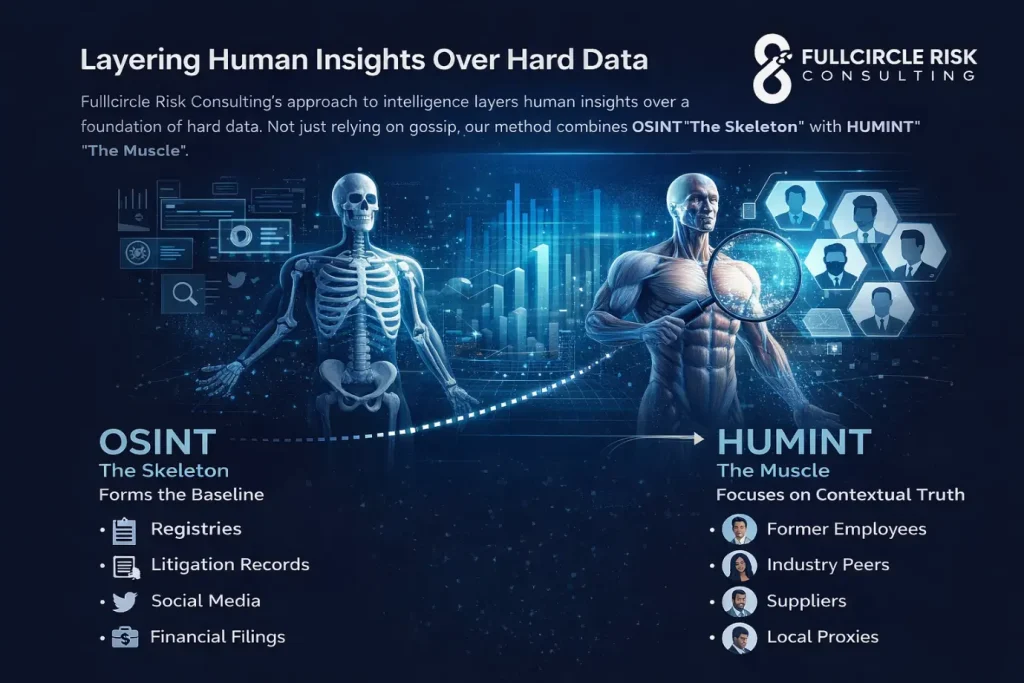
In an era of AI-driven data crawlers and instant digital records, it is tempting to believe the truth is just a few clicks away. But in the Asia-Pacific region—where public registries can be curated and corporate “face” is meticulously maintained—what is public isn’t always what is real.
Lost in Translation: Navigating Language and Cultural Barriers in Cross-Border Investigations
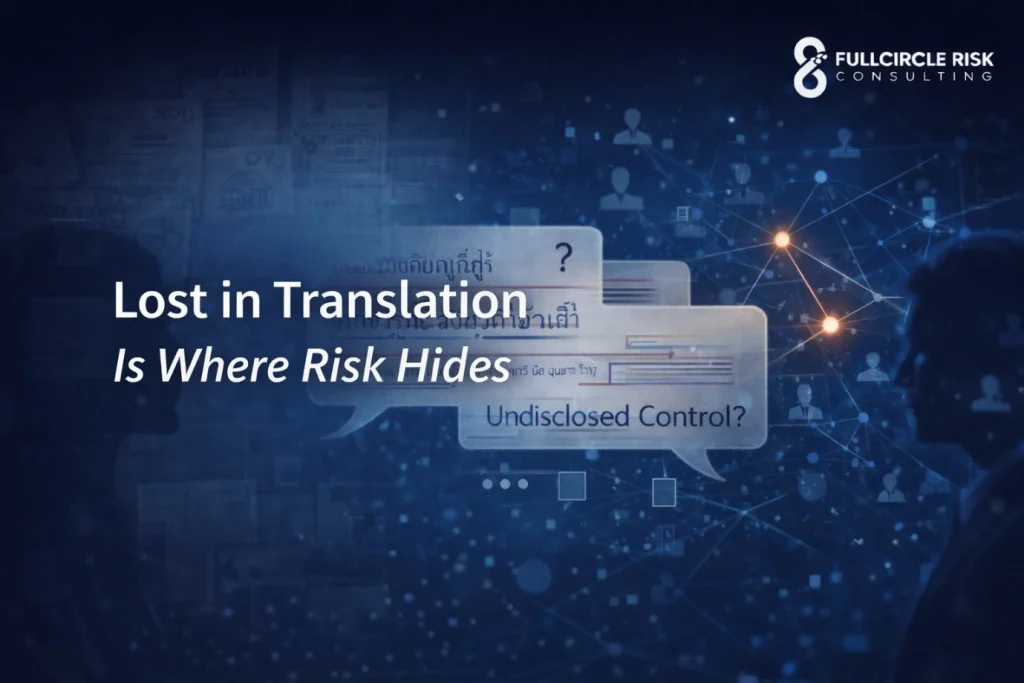
In the global risk landscape, intelligence work is rarely conducted in a single language or a universal cultural frame. From deciphering corporate filings in Thai to interviewing sources in Bahasa Indonesia or Vietnamese, the biggest risks often hide in the gaps between what is said and what is meant.
When Public Data Runs Dry: 10 Strategies for Due Diligence in Opaque Markets
When public data runs dry, most investigators hit a wall. But hitting a wall should mean– thinking differently. Especially, in many parts of Asia and the Middle East, public data is limited, fragmented, or unreliable. This makes traditional due diligence difficult—but not impossible.
Lessons from MAS Lapses: A Practical Guide to Establishing a Source of Wealth and Source of Funds
In July 2025, the Monetary Authority of Singapore (MAS) sent a shockwave through the financial sector by taking enforcement action against six banks. The charge? Significant AML compliance breaches, specifically regarding lapses in verifying Source of Wealth (SOW).
5 Red Flags in Asia’s High-Growth Startups: An Investor’s Due Diligence Guide

Asia’s startup ecosystem is a land of giants. From Vietnam to Indonesia and India, “to-be unicorns” are attracting record capital. However, as 2025’s high-profile scandals have proven, rapid scaling can be a perfect veil for systemic fraud.